A letter from HMRC about a tax year you’d almost forgotten is unsettling. The first thing most people want to know is simple: can they really go back that far?
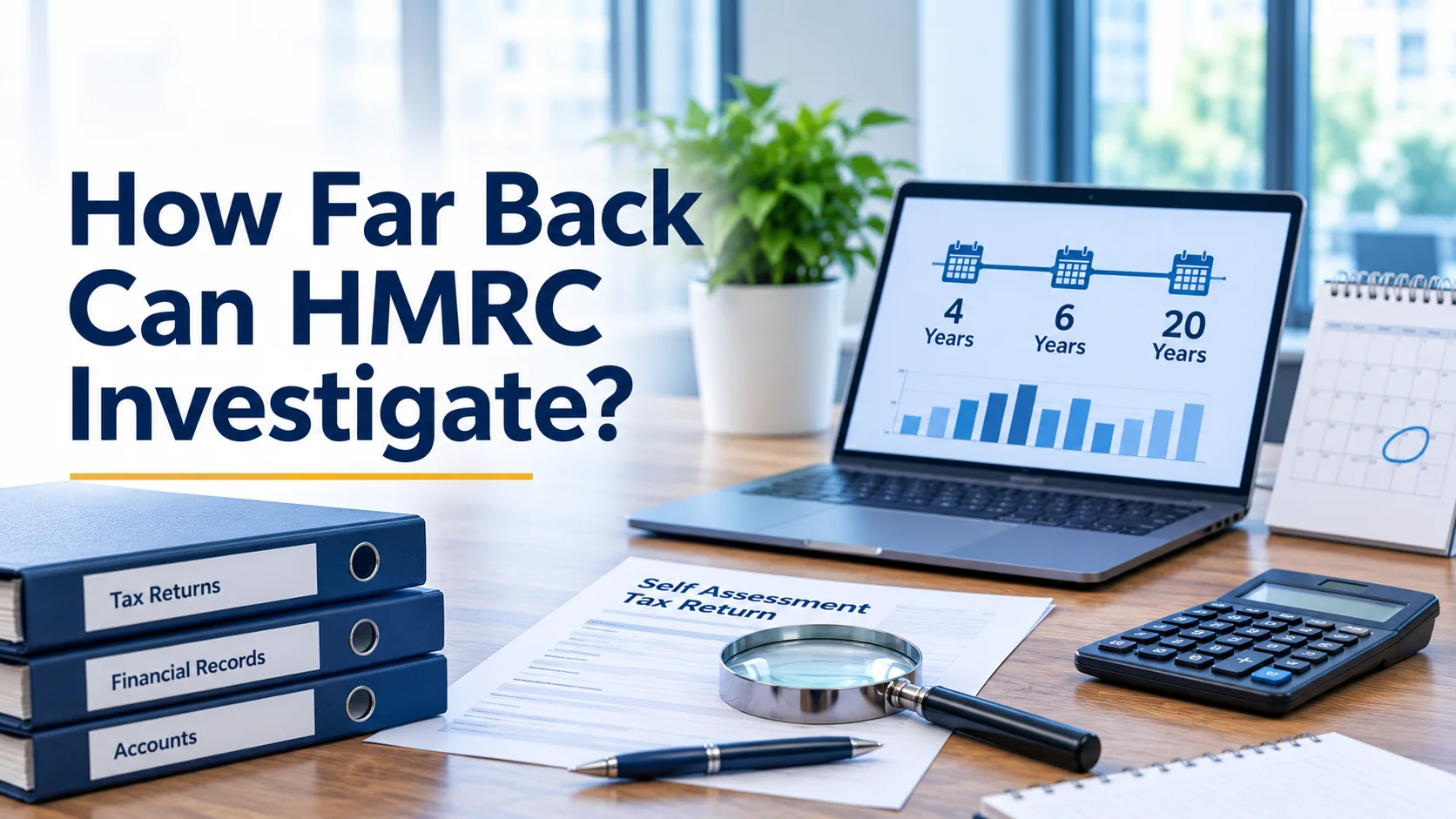
It depends on why the tax was underpaid. HMRC can normally look back 4 years. That stretches to 6 years if a mistake was careless, 12 years for some offshore income and up to 20 years where tax was lost deliberately or income was never declared at all.
At ATS Accountants, we help individuals and businesses respond to HMRC enquiries, and the time limit is often where the real argument sits. Here’s how the rules work, and what to do if HMRC gets in touch.
How far back can HMRC investigate? The short answer
| Situation | How far back HMRC can assess |
|---|---|
| Genuine error, or you took reasonable care | 4 years |
| Careless error | 6 years |
| Offshore income or gains (Income Tax, Capital Gains Tax, Inheritance Tax) | 12 years |
| Deliberate error, or you never told HMRC you had tax to pay | 20 years |
Each limit runs from the end of the tax year concerned, or the end of the accounting period for a company. So for the 2020/21 tax year, which ended on 5 April 2021, the normal 4 year limit ran out on 5 April 2025.
“HMRC’s own guidance on time limits“
What decides which time limit applies?
The question isn’t whether tax was underpaid. It’s how it came to be underpaid.
Reasonable care: 4 years
If you took reasonable care and still got something wrong, HMRC is limited to 4 years. Following sensible professional advice or making a genuine slip in a well kept set of records would usually fall here.
Careless errors: 6 years
Careless means you didn’t take reasonable care. Guessing figures, not keeping proper records or not checking a return before it went in can all count.
Deliberate errors and failure to notify: 20 years
Where HMRC believes tax was lost deliberately, it can go back up to 20 years. The same limit applies if you never told HMRC about income you should have declared, such as rental income or a side business that was never registered.
Offshore matters: 12 years
For Income Tax, Capital Gains Tax and Inheritance Tax involving offshore income, assets or transfers, HMRC can go back 12 years, even where the error was careless rather than deliberate.
Enquiries and discovery assessments aren’t the same thing
HMRC normally has 12 months from the date you file a return to open an enquiry into it. That’s the routine check most people mean when they talk about an investigation.
Once that window has closed, HMRC can only reopen the year with a discovery assessment. It has to find that tax has been underpaid, and certain conditions must be met. This is where the 4, 6, 12 and 20 year limits come in.
HMRC’s view isn’t the final word
To use the longer time limits, HMRC has to show that the behaviour was careless or deliberate. That’s often open to challenge, and so are HMRC’s own figures.
In one case we handled, HMRC raised assessments going back to 2018/19 using third party data from food ordering platforms and card payment providers. By questioning how HMRC had reached its numbers and rebuilding the client’s records, including business costs HMRC hadn’t allowed for, we showed the position was far more complex than HMRC’s calculations suggested. read the full case study here.
How long should you keep your records?
If you’re self employed or a landlord, keep your records for at least 5 years after the 31 January submission deadline for that year. Companies normally need to keep records for 6 years from the end of the financial year they relate to.
HMRC can look back further than that in some cases. Missing records make it harder to defend your position, but not impossible. Bank statements, invoices and third party records can often be used to rebuild the figures.
“GOV.UK’s guidance on keeping records“
What to do if HMRC gets in touch
- Don’t ignore it. Unanswered letters tend to lead to estimated assessments and penalties.
- Check which years and why. The years HMRC names tell you which time limit it thinks applies.
- Don’t guess figures. Estimates you send now can be hard to undo later.
- Get advice before you reply. An early, accurate response often shapes the rest of the enquiry.
If you already know something’s wrong, telling HMRC before it contacts you usually leads to lower penalties than waiting to be found.
Speak to an HMRC tax investigation specialist
HMRC can usually go back 4 years, but carelessness, offshore income or deliberate behaviour can stretch that to 6, 12 or 20 years. Which limit applies is often the point worth arguing.
If you’ve had a letter from HMRC, or you’re worried about an earlier year, ATS can review your position, rebuild your records and deal with HMRC for you. We’re based in Rochdale with offices in Chadderton and Rainford, and we support clients across Greater Manchester, St Helens and beyond, in person or remotely.
Find out more for our specialist support
Frequently Asked Questions
How far back can HMRC investigate my tax?
HMRC can normally go back 4 years from the end of the tax year. That extends to 6 years if an error was careless, 12 years for some offshore matters and 20 years if tax was lost deliberately or you never told HMRC about income you should have declared.
Can HMRC go back more than 6 years?
Yes. HMRC can go back 12 years for offshore income, gains and transfers, and up to 20 years where tax was lost deliberately or you failed to notify HMRC that you had tax to pay. For simple careless errors, 6 years is the limit.
How long does HMRC have to open an enquiry into my tax return?
HMRC normally has 12 months from the date you file a return to open an enquiry into it. After that, it can only reopen the year with a discovery assessment, which is where the 4, 6, 12 and 20 year limits apply.
Can HMRC go back 20 years?
Yes, but only in specific cases. The 20 year limit applies where tax was lost deliberately, or where you never told HMRC you had income or gains to declare.
What does HMRC count as careless?
How far back can HMRC go for undeclared rental income?
Do the same time limits apply to limited companies?
How long should I keep my tax records?
Self employed people and landlords should keep records for at least 5 years after the 31 January submission deadline. Companies normally keep records for 6 years from the end of the financial year. Keeping them longer can help if HMRC ever looks further back.